Tummy Confident

Flattering styles that make you feel great

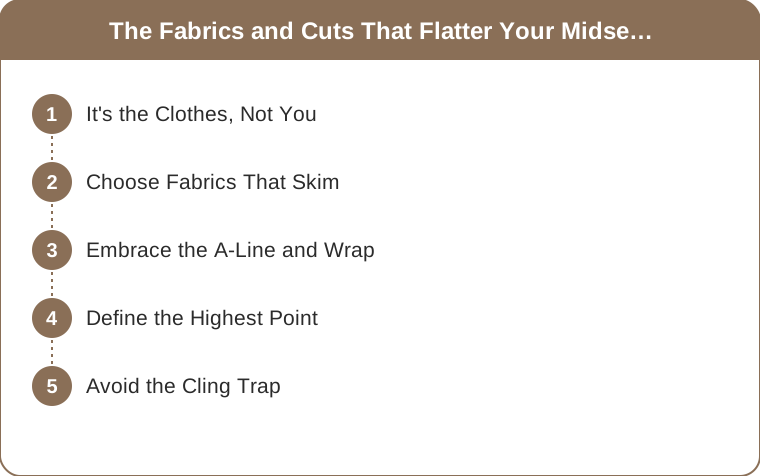
The Fabrics and Cuts That Flatter Your Midsection

2026-07-13

Two dresses, same size, same color, same silhouette on the hanger. One skims and one maps every contour. The difference isn’t your body between Tuesday and Thursday — it’s about 60 grams per square meter of fabric weight and how the fibers were spun.

Quick Answer: Fabric weight and drape do most of the flattering. Look for medium-weight fabrics around 150–250 gsm — crepe, ponte, modal jersey, viscose — which have enough body to fall away from the midsection instead of following it. Avoid anything thin, shiny, or high in clingy stretch. On cut, A-line, wrap, and empire shapes release the fabric below the narrowest point, which is where the geometry does the work.

The Fabrics and Cuts That Flatter Your Midsection

At a glance

Why Is It the Fabric, Not Your Body?

Because fabric behavior is a physical property, and it’s doing the same thing to everyone.

A thin knit with high elastane content is engineered to stretch and recover — which means it follows whatever it’s stretched over. That’s brilliant in a sports bra and unhelpful in a top you want to skim. A medium-weight crepe has enough mass to fall vertically under its own weight, so it bridges over contours instead of tracing them.

This is genuinely freeing once it clicks. The frustrating garment in your closet isn’t evidence about you; it’s a fabric spec that was never going to work for what you wanted it to do.

The two-second fitting-room test: pinch the fabric between two fingers and let go. If it falls straight down, it’ll skim. If it holds the shape your fingers made, it’ll cling.

Which Fabrics Actually Skim?

Weight and weave are the two variables. Here’s what to look for:

Reliable skimmers:

  • Crepe (polyester or viscose) — the crinkled surface breaks up light and it hangs beautifully. The most dependable option in the category
  • Ponte knit — a double-knit with real structure that smooths without compressing. Ideal for dresses and trousers
  • Modal and viscose jersey — heavier and more fluid than cotton jersey, falls straight rather than following curves
  • Tencel and linen blends — natural body and breathability, especially good in the current late-summer stretch
  • Georgette and chiffon — weightless, best as an overlay or a sleeve rather than a whole garment
  • Fine wool suiting — the reason a well-made blazer flatters almost everyone

The cling trap:

  • Thin cotton jersey — the standard t-shirt weight, which clings more as it warms up
  • Shiny satin and liquid-look fabrics — reflected light highlights every contour it crosses
  • Anything above about 5% elastane with no lining — engineered to follow
  • Rib knit in a thin gauge — the vertical lines look promising and the fabric doesn’t cooperate

The weight guideline: roughly 150–250 gsm is the sweet spot for tops and dresses. Under 120 gsm is where clinging starts.

The Fabrics and Cuts That Flatter Your Midsection

Which Cuts Do the Geometry Work?

Every flattering cut does the same structural thing: it attaches at a narrow point and releases below it.

A-line. Fitted at the shoulder or waist, widening steadily downward. The fabric never touches the midsection because it’s already moving away from the body by the time it gets there. Works as a dress, a skirt, or a swing top.

Wrap and faux-wrap. The diagonal front line does two useful things — it breaks up the horizontal plane and it lets you set the waist tension yourself. Adjustable placement is genuinely rare in ready-to-wear.

Empire. Seamed 1–2 inches under the bust, releasing everything below. The highest-release option, and the one to check carefully — a seam sitting too low lands on the fullest point and works against you.

Fit-and-flare. Fitted through the bodice to the natural waist, then flared. Best when you want waist definition rather than full release.

What doesn’t work structurally: a straight tube shape in a thin fabric (nothing releases, so it follows all the way down), and anything with a stiff, unyielding waistband that sits at the widest point.

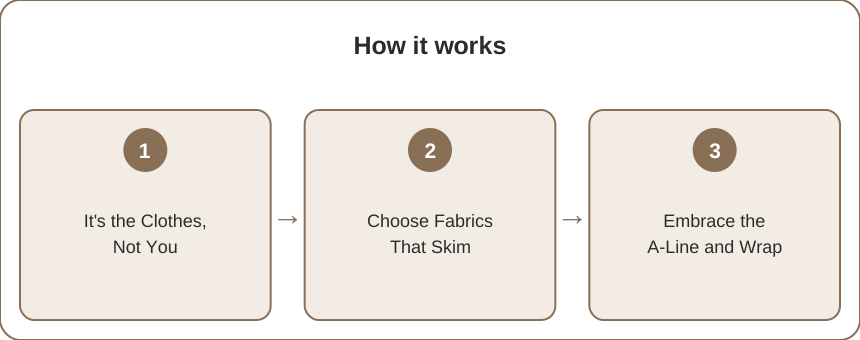
How it works

Myth vs Fact

Myth: Loose fabric everywhere is the safest choice. Fact: Fully shapeless clothing reads as your outline, so it adds volume rather than hiding it. Skimming needs a defined point somewhere — usually shoulders or the high waist — with release below.

Myth: Stretch means comfortable. Fact: Stretch means it follows you. Comfort in this category comes from a soft fabric with enough weight to hang, not from a fabric that adapts to every contour.

Myth: Dark colors do the work. Fact: A thin, clingy black top clings exactly as much as a red one. Weight and drape matter far more than color; color just makes the clinging slightly less visible in photographs.

Myth: You need a stiff waistband to define a waist. Fact: A soft tie, a wrap, or a well-placed seam defines a waist without pressing into the midsection — and it stays comfortable when you sit down.

Myth: Natural fibers are always better. Fact: A good polyester crepe drapes better than a thin cotton voile. Fiber content matters less than weight, weave, and finish.

How Do You Shop for This in Practice?

Four checks, all of which take under a minute:

  1. Read the weight or feel it. If the product page lists gsm, aim for 150–250. If not, hold it up — you shouldn’t be able to see clearly through it
  2. Do the pinch-and-release test. Falls straight down, or holds the shape? That’s your answer
  3. Check where the seam sits. For an empire cut, 1–2 inches under the bust. For fit-and-flare, at your actual natural waist
  4. Check the lining. A lined dress in a mid-weight fabric flatters far more than an unlined one in a heavier fabric, because the lining creates a smooth layer underneath

For a reliable default, an A-line midi dress in crepe or ponte does everything on this list at once — enough weight to fall, a cut that releases below the bust or waist, and a smooth surface that doesn’t reflect light back at every contour.

FAQ

What’s the single best fabric for a flattering dress?

Crepe, in a medium weight. It has a matte crinkled surface that breaks up light, enough body to fall vertically, and it’s forgiving about wrinkles and sitting — which is more than can be said for satin or thin jersey.

Should I avoid all fitted clothing?

Not at all. Fitted through the shoulders and bust with release below is the most flattering structure there is. What to avoid is fitted at the midsection in a thin fabric — the cling comes from that combination specifically.

Does shapewear help, or is it a workaround?

It’s an option, not a requirement. A well-chosen fabric and cut do the same job for eight hours without you thinking about it, which is why most people who solve this with fabric stop reaching for shapewear.

TL;DR:

  • Fabric weight and drape do most of the work — aim for roughly 150–250 gsm
  • Choose crepe, ponte, modal jersey, viscose, or Tencel blends
  • Avoid thin cotton jersey, shiny satin, and unlined high-stretch fabrics
  • The pinch-and-release test settles it in two seconds
  • A-line, wrap, and empire cuts release the fabric below a narrow attachment point
  • Dark color doesn’t fix a clingy fabric; weight and weave do

A flattering midsection is a fabric-and-cut question, not a body question. Pick fabrics with enough weight to fall, cuts that release below the narrowest point, and skip the cling trap entirely — the right clothes genuinely do the work for you.

Keep Reading

This article is for general styling and informational purposes only. Trends, sizing, availability and pricing may vary by brand and season.

tummy flatteringfabricstyling

← All articles