Tummy Confident

Flattering styles that make you feel great

Tummy-Flattering Outfits That Are Actually Stylish

2026-07-11

There’s a specific kind of shopping trip where you buy three things that all do the same job: cover. You get home, try them on again, and realize you’ve bought a uniform for hiding. Feeling good about your midsection doesn’t require a tent — it requires knowing which four or five design details actually do the work.

Quick Answer: The most reliably tummy-flattering pieces share four traits: a waistline that sits at or just above your natural waist, fabric that drapes instead of clings, an open vertical layer over a fitted base, and a defined shoulder line for balance. Empire cuts, wrap styles, and A-line silhouettes deliver all four. Shapeless oversized clothing does the opposite — it adds volume without giving the eye a line to follow.

Tummy-Flattering Outfits That Are Actually Stylish

Why Does the Empire Waist Work So Well?

Because it moves the narrowest point of the outfit up to the narrowest point of your body — just under the bust — and then lets everything below fall free.

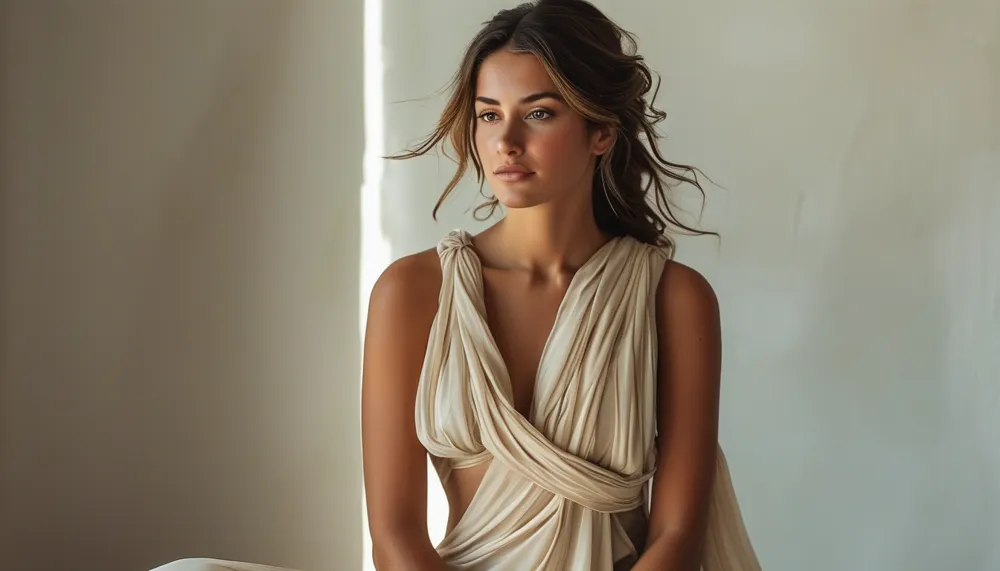
An empire line does two jobs at once. It defines a waist without asking your actual waist to be the defined part, and it creates a long uninterrupted drop from bust to hem, which reads as height. That’s why the silhouette has survived two centuries of changing fashion: the geometry just works.

What to look for: a seam sitting 1–2 inches below the bust, not at the ribcage. Any lower and it lands on the fullest part of the midsection, which is the one placement that backfires.

Where it works: an empire waist midi dress for events, an empire-seamed blouse over slim trousers for everyday, a babydoll-cut top with straight-leg jeans for weekends.

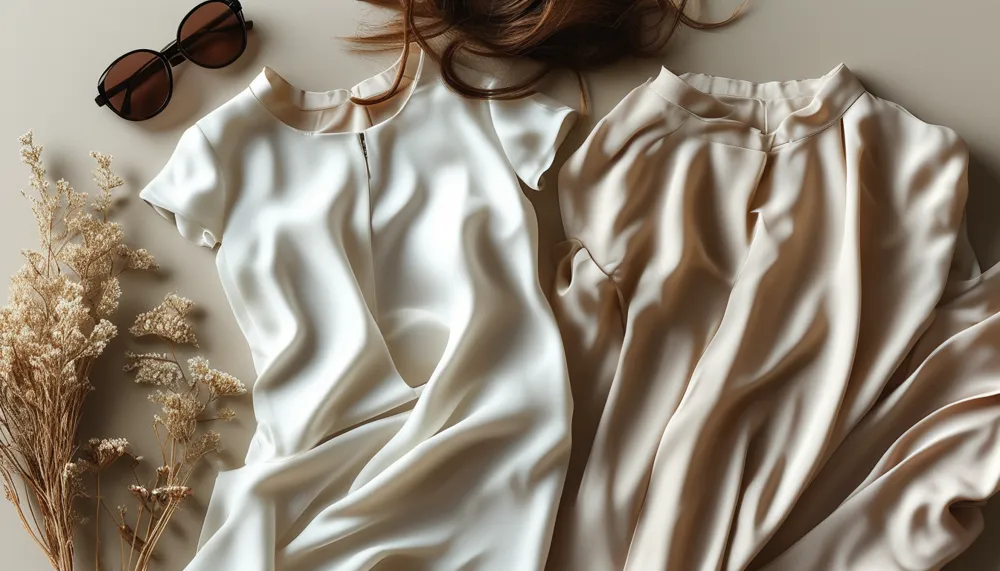
Styling flat lay

Which Fabrics Skim Instead of Cling?

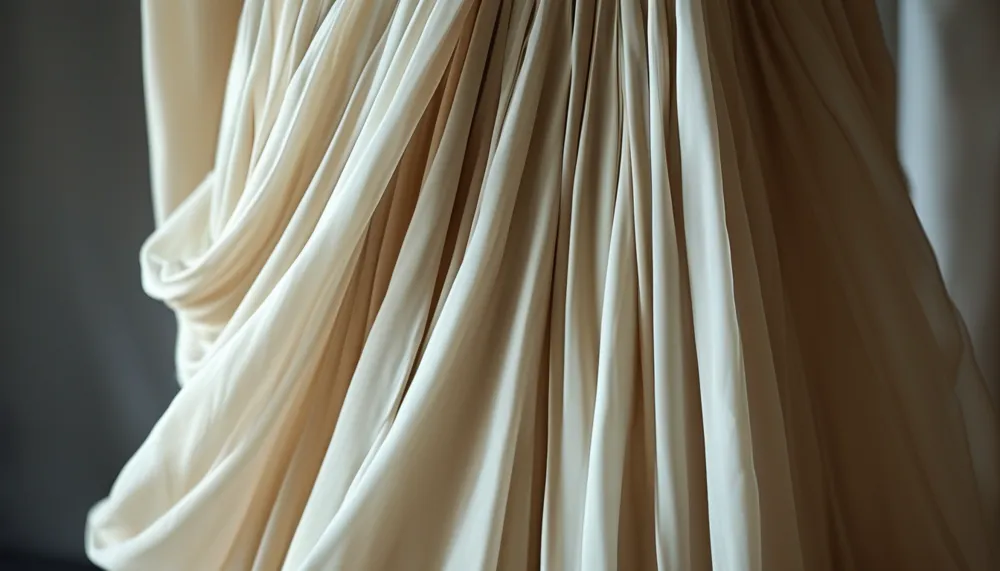
Drape is a property of weight and weave, and it’s the difference between a piece that flows over the midsection and one that maps it.

Fabrics that skim:

  • Crepe — slight texture, real weight, holds its shape without gripping. The most reliable choice
  • Modal and viscose jersey — soft, fluid, falls straight down rather than following curves
  • Chiffon and georgette — weightless, ideal as an overlay or a sleeve
  • Ponte knit — structured enough to smooth, stretchy enough to be comfortable
  • Tencel and linen blends — breathable with natural body, perfect for late summer into fall

Fabrics that cling:

  • Thin cotton jersey — the classic t-shirt weight, which clings the moment it gets warm
  • Shiny satin — reflects light off every contour
  • Anything with a high spandex content and no lining

The reliable test in a fitting room: pinch the fabric and let go. If it falls straight down, it’ll skim. If it stays where your fingers were, it’ll cling.

Point detail

Where Should the Waistline Actually Sit?

At your natural waist — the narrowest point, usually about an inch above your navel — or just above it. Never at or below the fullest part of your midsection.

This single placement decision does more work than fabric, color, or cut. When the waistline sits at the narrowest point, everything above and below reads in proportion to that point. When it sits below, the outfit announces the widest measurement instead.

Styles that get placement right:

  • Wrap dresses and tops — the tie is adjustable, so you place the waist yourself
  • High-rise bottoms with a loose tuck — the front tuck defines the waist, the loose back skims
  • A-line skirts with a fitted waistband — narrow at the top, released below
  • Paper-bag waists — the gathering sits above the midsection and the volume falls away from it

The half-tuck deserves its own mention. Tucking only the front couple of inches of a top defines the waist without pulling the fabric tight across the middle. It takes three seconds and it’s the highest-return styling move on this list.

Myth vs Fact

Myth: Oversized clothing hides a tummy. Fact: It hides the whole shape, and the eye reads the outer edge as your outline. A skimming piece with a defined waist looks smaller than a shapeless one two sizes up.

Myth: Black is the only slimming color. Fact: Tonal dressing in any color does the same thing. A head-to-toe camel or navy column elongates identically — the effect comes from the unbroken line, not the darkness.

Myth: You should avoid tucking anything in. Fact: A front-only half-tuck is one of the most flattering moves available. It’s the full all-around tuck that pulls fabric tight where you don’t want it.

Myth: Shapewear is the fix. Fact: It’s an option, not a requirement, and it’s often less comfortable than simply choosing a draping fabric. The right crepe dress does the job for eight hours without you thinking about it once.

Myth: Horizontal stripes are always a mistake. Fact: Stripe width and fabric drape matter far more than direction. A fine stripe in a fluid fabric reads as texture, not as width.

Style guide

How Do Open Layers Change the Whole Outfit?

They add two vertical lines exactly where you want the eye to travel.

A long cardigan, a duster coat, an unbuttoned blazer, or a kimono worn open over a fitted base creates a strong vertical column down each side of your torso. The eye follows those lines from shoulder to hem, which reads as length rather than width.

Three rules make it work:

  1. Keep it open. Buttoned, the layer becomes one wide rectangle and the effect disappears
  2. Fitted underneath. Volume over volume adds bulk; a slim base is what makes the layer read as intentional
  3. Long enough. The layer should extend past the widest point of your hip, ideally to mid-thigh or below

Structure at the shoulders finishes it. A defined shoulder — a slight pad, a set-in sleeve, a strong lapel — balances the proportion and makes the waist look narrower by comparison. Soft below, structured above, is the formula.

FAQ

What’s the single most flattering dress style for a tummy?

A wrap or faux-wrap in a crepe or modal jersey. It gives you an adjustable waist placement, a naturally draping fabric, and a diagonal line across the midsection — three flattering elements in one garment.

Should I size up to avoid clinging?

Usually not. Sizing up adds width everywhere, including the shoulders and bust, where it looks unfitted. Change the fabric or the cut instead — a draping fabric in your true size skims better than a clingy one a size larger.

Do belts work, or should I avoid them?

They work well when placed at your natural waist over a fluid fabric, especially a wider soft belt. Skip narrow belts sitting low on the hips, which draw a horizontal line at the widest point.

TL;DR:

  • Waistline placement at or just above the natural waist matters more than anything else
  • Choose crepe, modal, ponte, or chiffon; skip thin cotton jersey and shiny satin
  • Open long layers over a fitted base create vertical lines; keep them unbuttoned and past the hip
  • The front-only half-tuck defines a waist without pulling fabric tight
  • Tonal dressing in any color elongates — black isn’t required
  • Oversized clothing adds volume rather than hiding it

Feeling confident around your midsection comes down to a handful of repeatable choices: empire and wrap lines, fabrics that fall, a waist defined at the right height, and long open layers. Get those working together and the outfit does the flattering for you — quietly, all day, without a single adjustment in a bathroom mirror.

Keep Reading

This article is for general styling and informational purposes only. Trends, sizing, availability and pricing may vary by brand and season.

← All articles